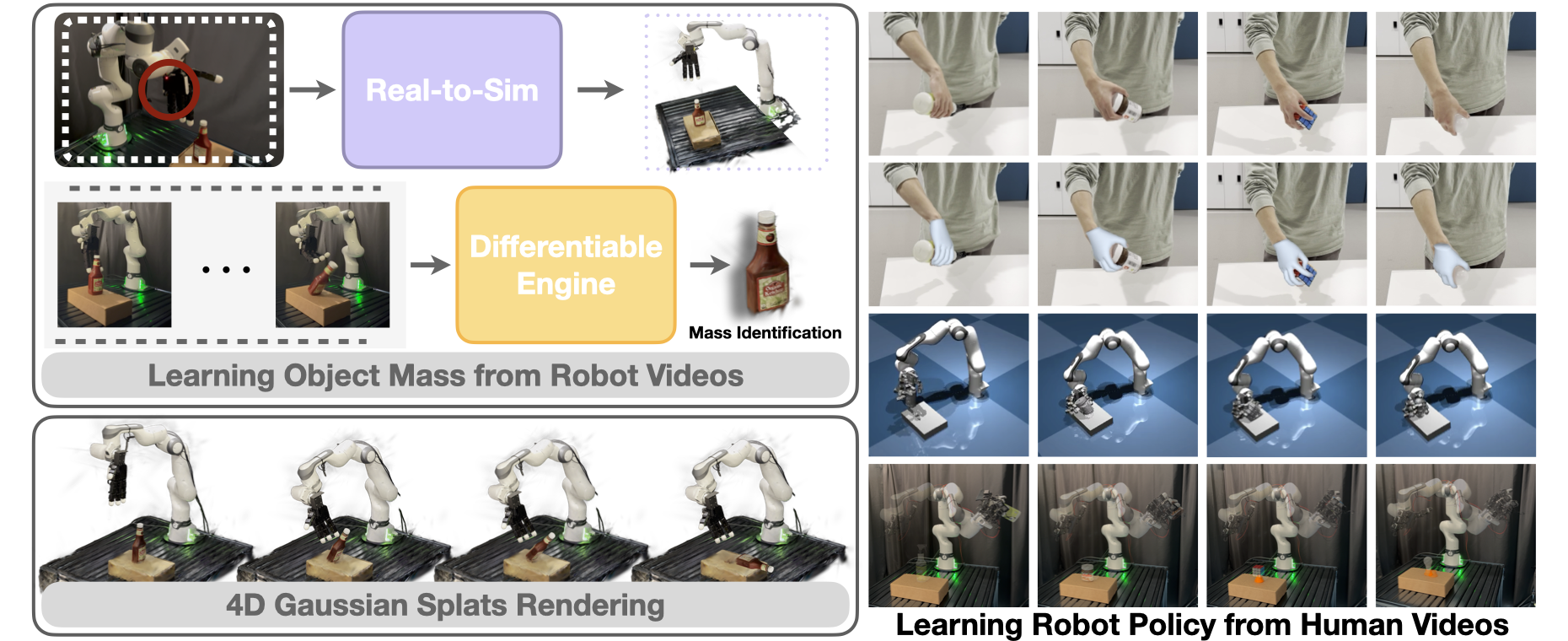
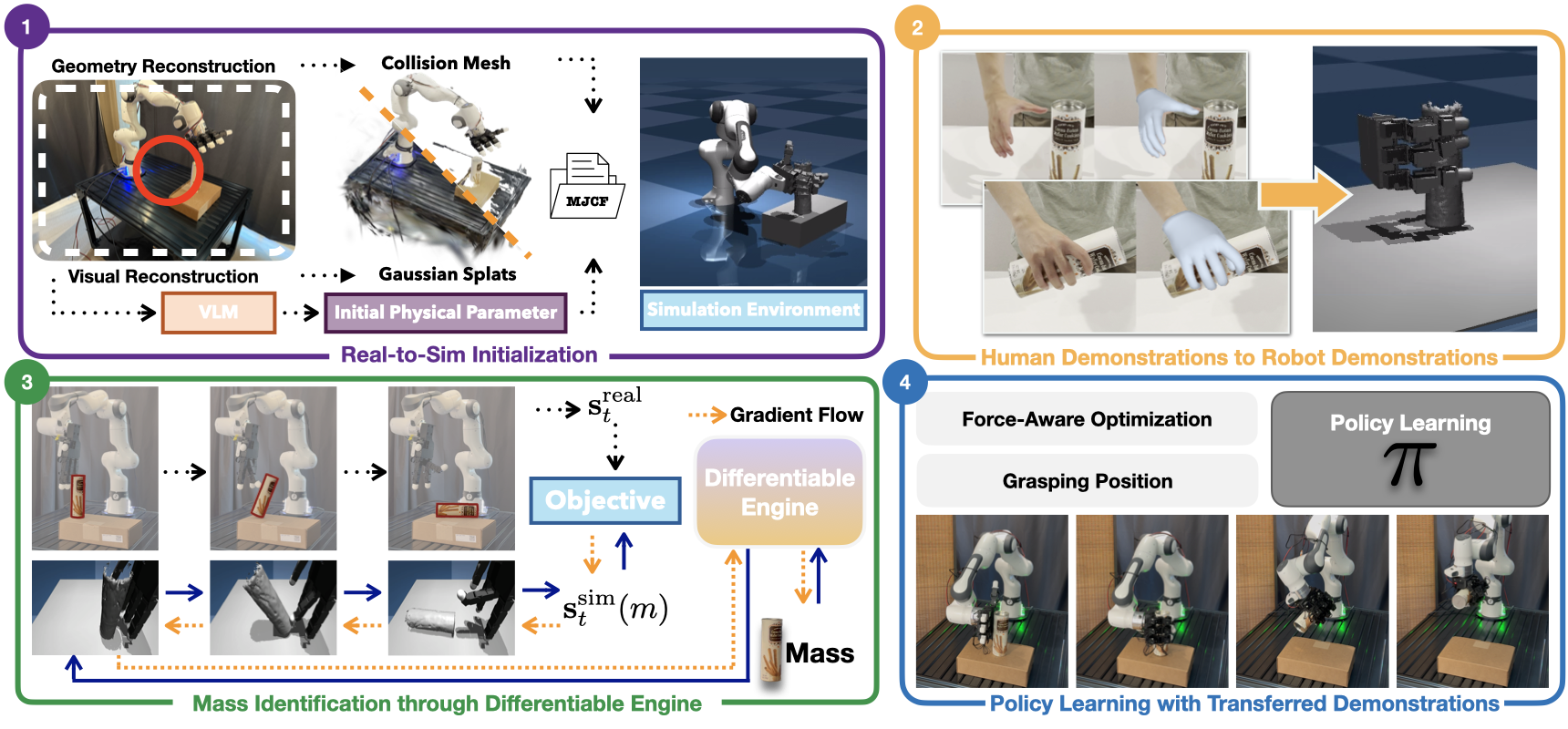
Simulation provides a cost-effective and flexible platform for data generation and policy learning to develop robotic systems 🤖. However, bridging the gap between simulation and real-world dynamics remains a significant challenge, especially in physical parameter identification 🔍. In this work, we introduce a real-to-sim-to-real framework that leverages the Gaussian Splat representations to build a differentiable engine, enabling object mass identification from real-world visual observations and robot control signals, while enabling manipulation policy learning simultaneously ⚖️.
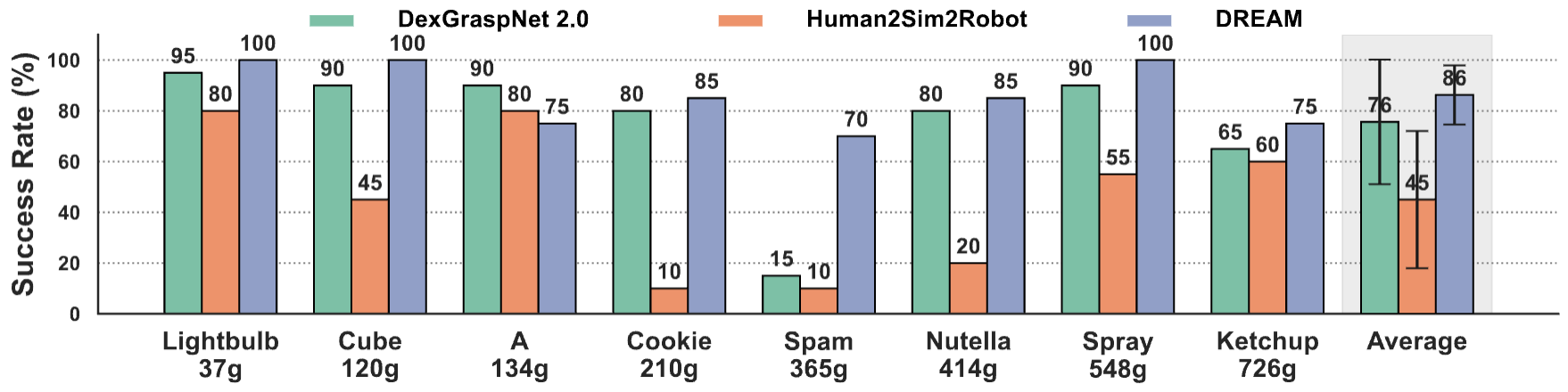
Through optimizing the mass of the manipulated object, our method automatically builds high-fidelity and physically plausible digital twins 🌟. Additionally, we propose a novel approach to train the force-aware grasping policies from limited data by transferring feasible human demonstrations into simulated robot demonstrations 🎯. Through comprehensive experiments, we demonstrate that our proposed framework achieves accurate and robust performance on mass identification across various object geometries and mass values 📊. Those optimized mass values facilitate force-aware policy learning, achieving superior and high performance on object grasping, reducing the sim-to-real gap effectively ✨.